WUI Fire Evacuation and Sheltering Considerations — Assessment Planning and Execution
EGRESS ROADS AND ARTERIES
Problem
Life-threatening flame, ember, and smoke exposures (burnover conditions) can overtake evacuating residents. These burnovers during egress can result in injuries or fatalities.
Solution
The primary mitigation of this problem is to reduce the potential for high fire exposures along the key egress routes and arteries. Successful fuel management and exposure mitigation will maintain tenability of the egress routes and allow evacuees to remain in their vehicles and egress to safety.
Effective mitigation will require fuel thinning and vegetation removal along evacuation route corridors, followed by continued maintenance of these fuel treatments over time.This fuel management will reduce the exposures from vegetative fuels; however, it does not address any potential exposures from structures on the egress route.
Emergency managers and first responders should be aware of locations where structures and other unmovable WUI fuels may present hazardous exposures to egress routes should they ignite. Learn more...
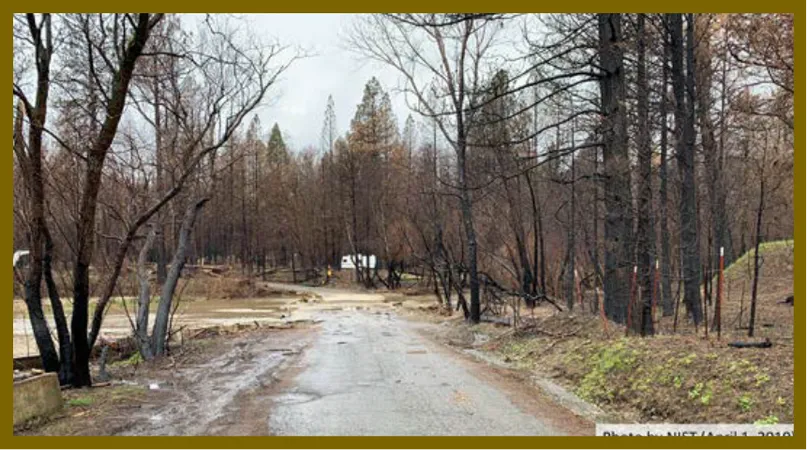
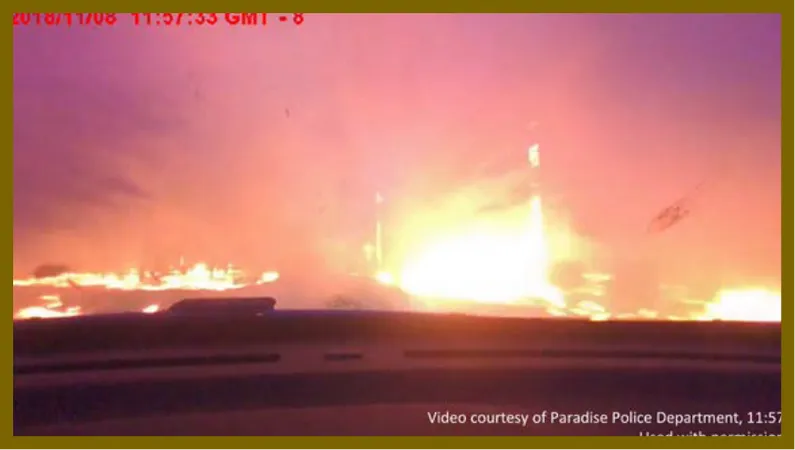
Credit: NIST(left), Paradise Police Dept.(right)
Keeping egress arteries clean is simple in concept,
but the implementation can be complex.
- Fuel treatments must extend well beyond the right of way, potentially introducing conflicts with landowners
- Some fuels, like permanent structures adjacent to egress arteries, will not be removable. Therefore, the egress route may still be compromised at some point during the incident if the structures ignite.
- Fuel treatments must be maintained at recurring intervals (varying based on local conditions - typically ranging from 2 to 5 years), introducing significant costs
- Evacuees still need to be able to get to the safe artery; localized conditions will still impact evacuation.