WUI Fire Evacuation and Sheltering Considerations — Assessment Planning and Execution

ASSESSMENT
Every evacuation plan starts with a clear picture of the people and places at risk. Understanding your community's layout, population, and potential hazards and complications is essential to creating a plan that works when it matters most.
Evacuation planning starts with understanding what makes your community unique — from roads to residents.
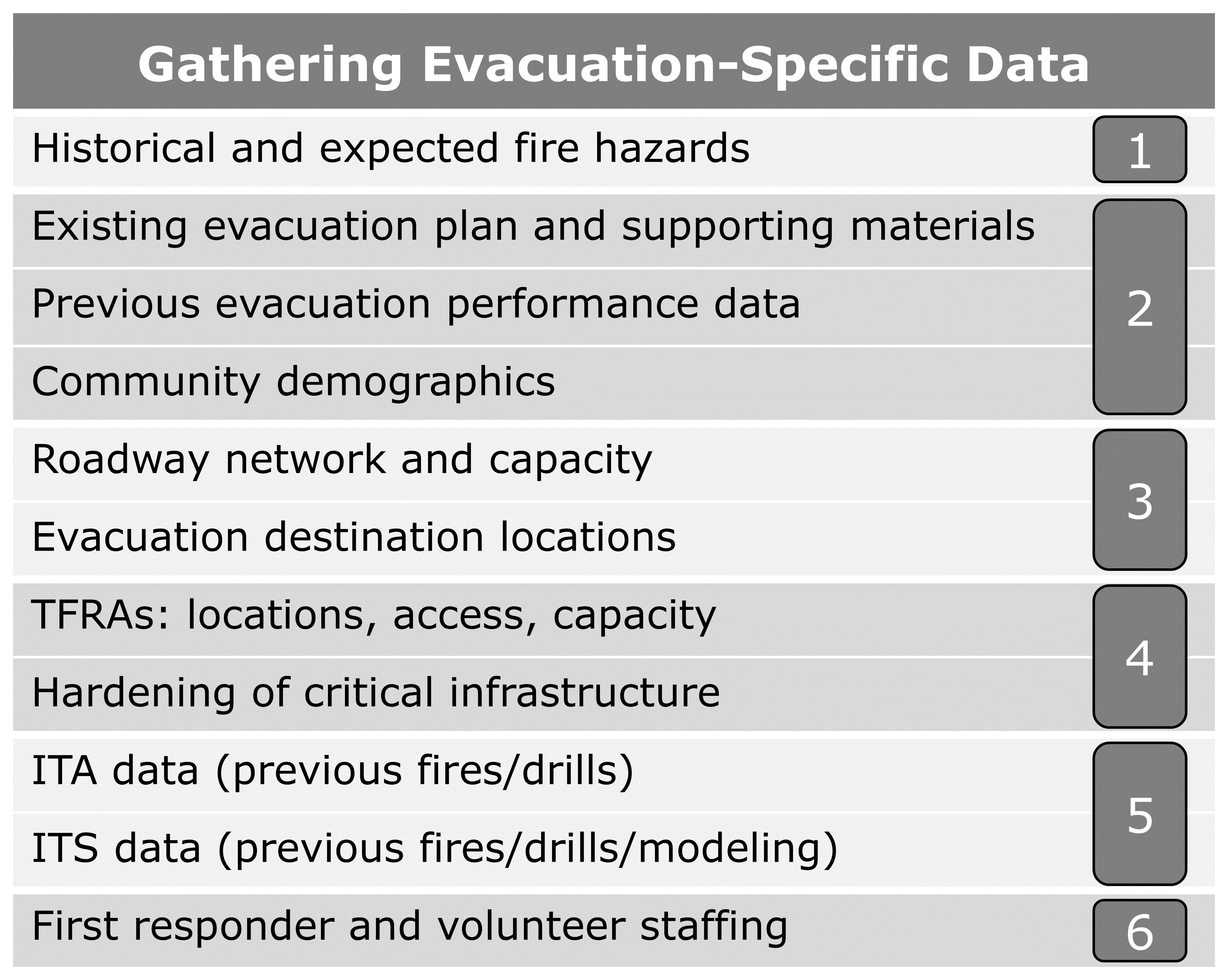
Development, implementation, and refinement of community evacuation plans begin with an assessment of relevant community information. This data collection will enable an assessment of conditions and attributes within the community and its surroundings and enable the planning phase.
Any existing notification and evacuation plans should be compiled along with the supporting material used for their development. Based on review of existing plans and the concepts outlined in this course, additional information may be needed to identify necessary updates and alternatives to the evacuation plan.
Specific data supporting implementation or updates to evacuation plans and local decision support tools are described in the previous modules, including
- The locations and capacity of TFRAs
- The time it takes to activate the notification system and conduct an evacuation (ITS)
- Local decision-making criteria.

The methods, precision, and accuracy of the data should be documented to provide important context for the planning and execution phases. For example, ITA may be estimated, or it may be determined more precisely through targeted training exercises. Collecting all of this information in a centralized database will facilitate a more comprehensive and effective development of notification and evacuation plans.
Learn more...about each category of data to be collected.
A COMMUNITY WUI FIRE HAZARD EVALUATION FRAMEWORK
Supporting a comprehensive WUI fire response plan beyond evacuation: An increased understanding of the relationships between fire-evacuation, fire-structural response, and fire-defensive actions is needed to assess the overall community WUI fire hazard. The Community WUI Fire Hazard Evaluation Framework can be used to help identify and coordinate relevant information sources to optimize the community-level response to WUI fire hazards in a more integrated way with the intended result of increased life safety and reduced losses.
COMMUNITY WUI FIRE
HAZARD EVALUATION
FRAMEWORK
Learn more...
This framework includes information on community size, population, and fuels; on notification and evacuation; and on the community infrastructure and firefighting response potential.
It is likely that much of the information identified in the Framework is already included in various community and local government documents, including existing evacuation plans, emergency management standard operating procedures (SOPs), and Community Wildfire Protection Plans (CWPPs). Expanding the evacuation and notification data types indicated in the Framework to include TFRA locations, durations of evacuation system components (ITS, ITA, ET) will facilitate a more comprehensive integration of evacuation integration into the community response.